Top 10 B2B Healthtech Brands changing up the healthcare industry
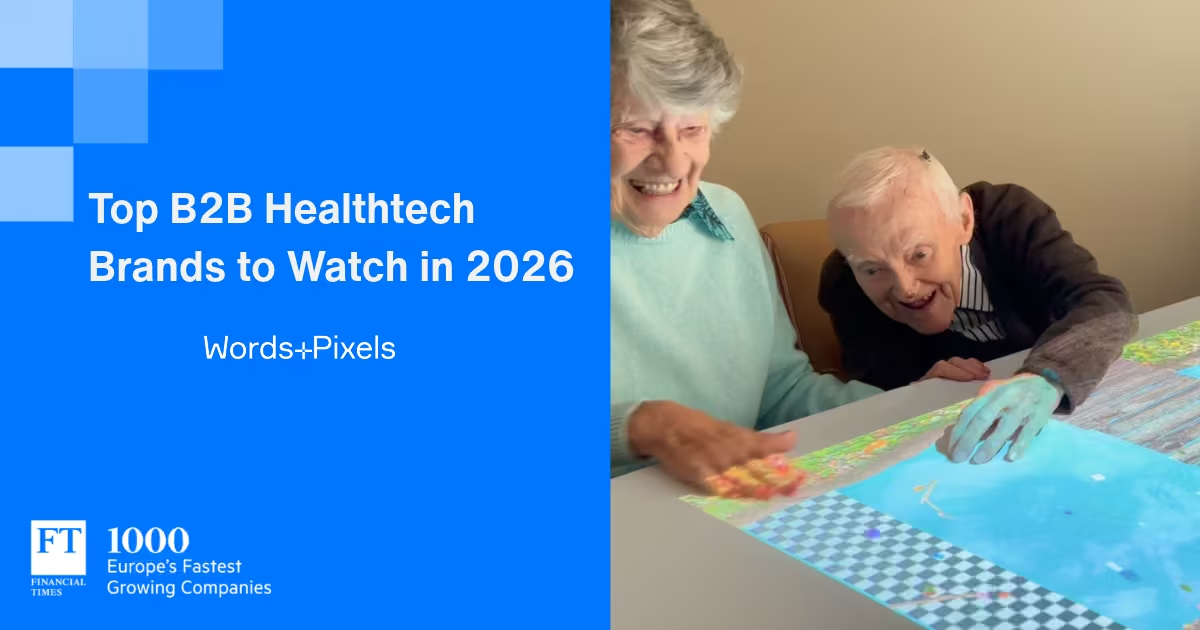
Selling software into the NHS and care sector used to be about innovation. Today, it's about proof.
Procurement teams are dealing with serious point-solution fatigue, budgets are tighter than ever, and buyers researching new platforms are increasingly bypassing Google altogether in favour of AI search tools that summarise the market before anyone clicks through to a website.
Add in a workforce gap that NHS England puts at over 100,000 vacancies and Skills for Care puts at around 96,000 in social care alone, and it's easy to see why efficiency-first platforms are winning contracts over flashy ones.
But even the best platform doesn't sell itself. The brands breaking through in 2026 are trading marketing hype for peer-reviewed proof, outcomes data and credible third-party validation – which is exactly where the right PR partner comes in.
If you want to see where UK B2B healthtech is actually heading, these are the 10 brands to watch.
1. Person Centred Software
Product: Digital care planning and management platform
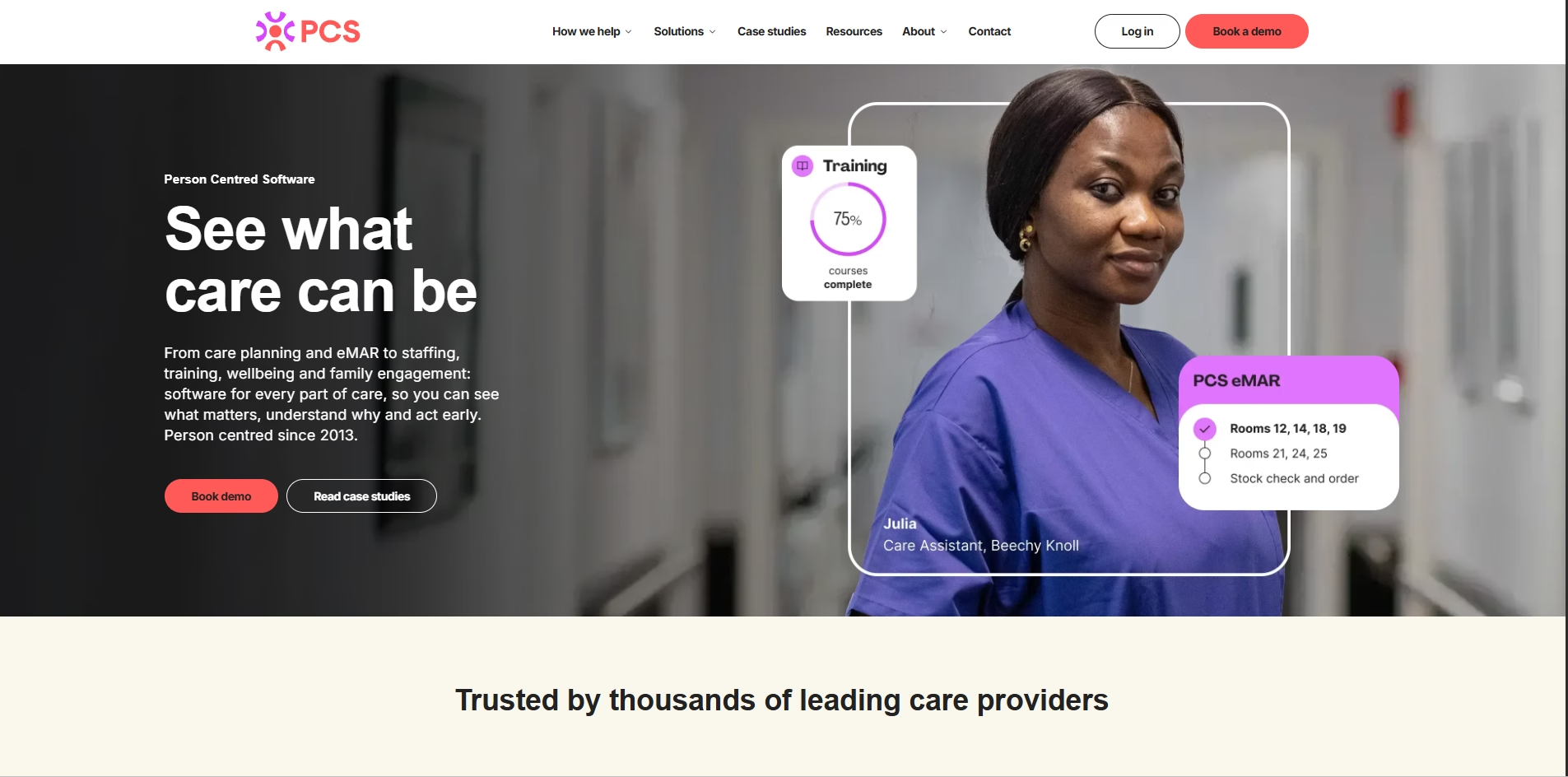
Person Centred Software is the market leader in UK digital care planning, used by more than 8,000 care homes to record, evidence and manage day-to-day care. As care providers face growing pressure to demonstrate quality and compliance, platforms like this are becoming essential rather than optional.
Why it's one to watch
- Setting the standard for digital care planning at scale
- Helping providers evidence outstanding care and meet CQC requirements
- Freeing up carer time from paperwork to give back to residents
Person Centred Software shows what it looks like when B2B healthtech becomes the default way an entire sector operates.
2. Birdie | Words+Pixels PR partner
Product: Homecare technology platform
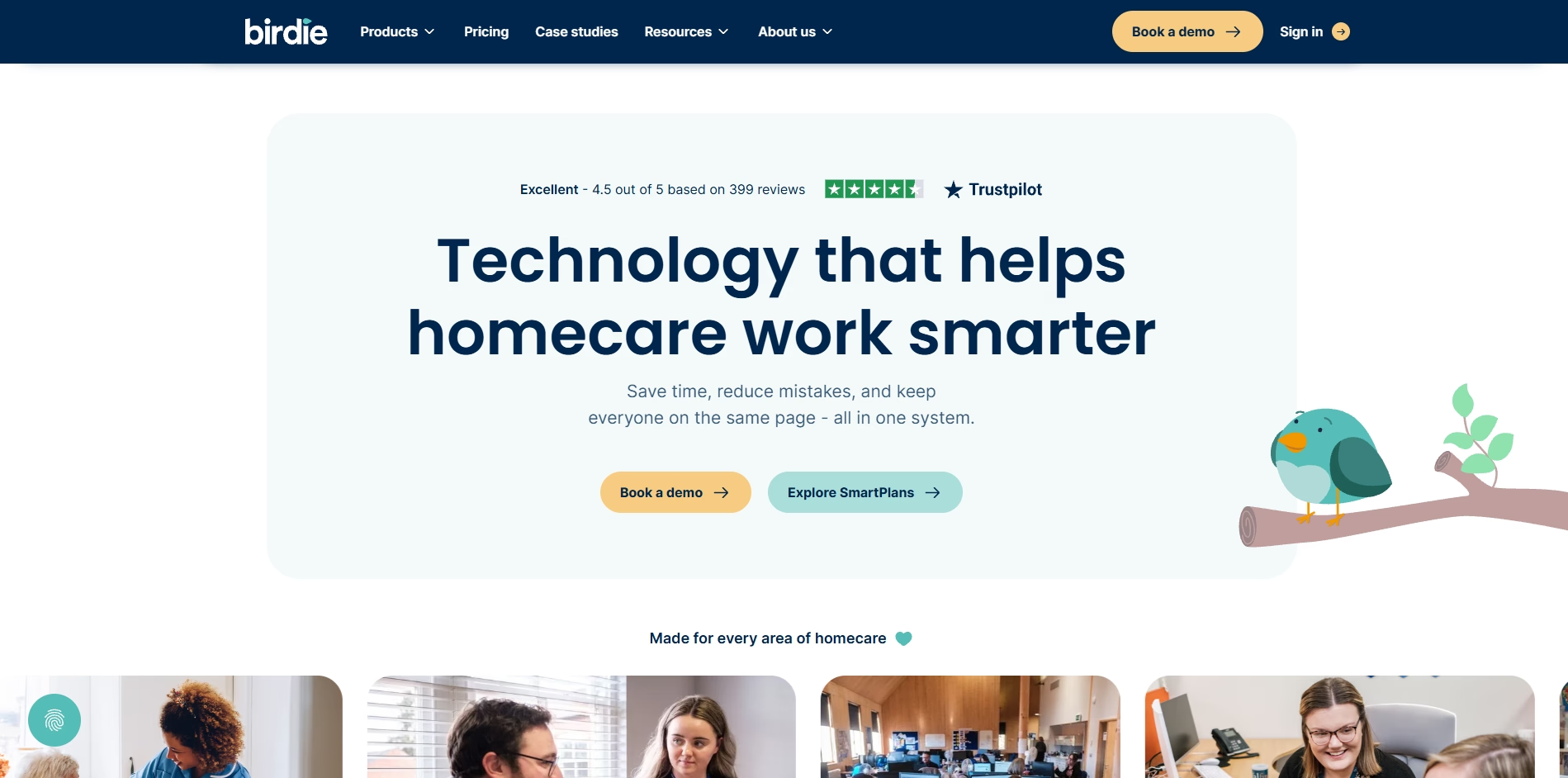
Birdie builds digital tools for homecare providers, helping them manage care delivery, teams and operations more efficiently. As more healthcare moves into the community, homecare technology is becoming increasingly important infrastructure.
Why it's one to watch
- Digitising a traditionally fragmented sector
- Reducing the administrative burden on care providers
- Using data to improve visibility and coordination across care
3. Nourish Care
Product: Digital care management software
Nourish Care supports more than 2,500 care providers and 45,000 people with a cloud-based platform for planning, recording and coordinating care. Backed by Livingbridge, Nourish has built deep integrations across the social care ecosystem – from acoustic monitoring to falls prevention.
Why it's one to watch
- Connecting care providers with the wider health and social care system
- Demonstrating the value of interoperability in social care tech
- Supporting the NHS's digital social care records ambitions
Nourish Care illustrates how B2B healthtech is quietly becoming the connective tissue of the UK's care sector.
4. Lantum
Product: NHS workforce and staff-bank platform
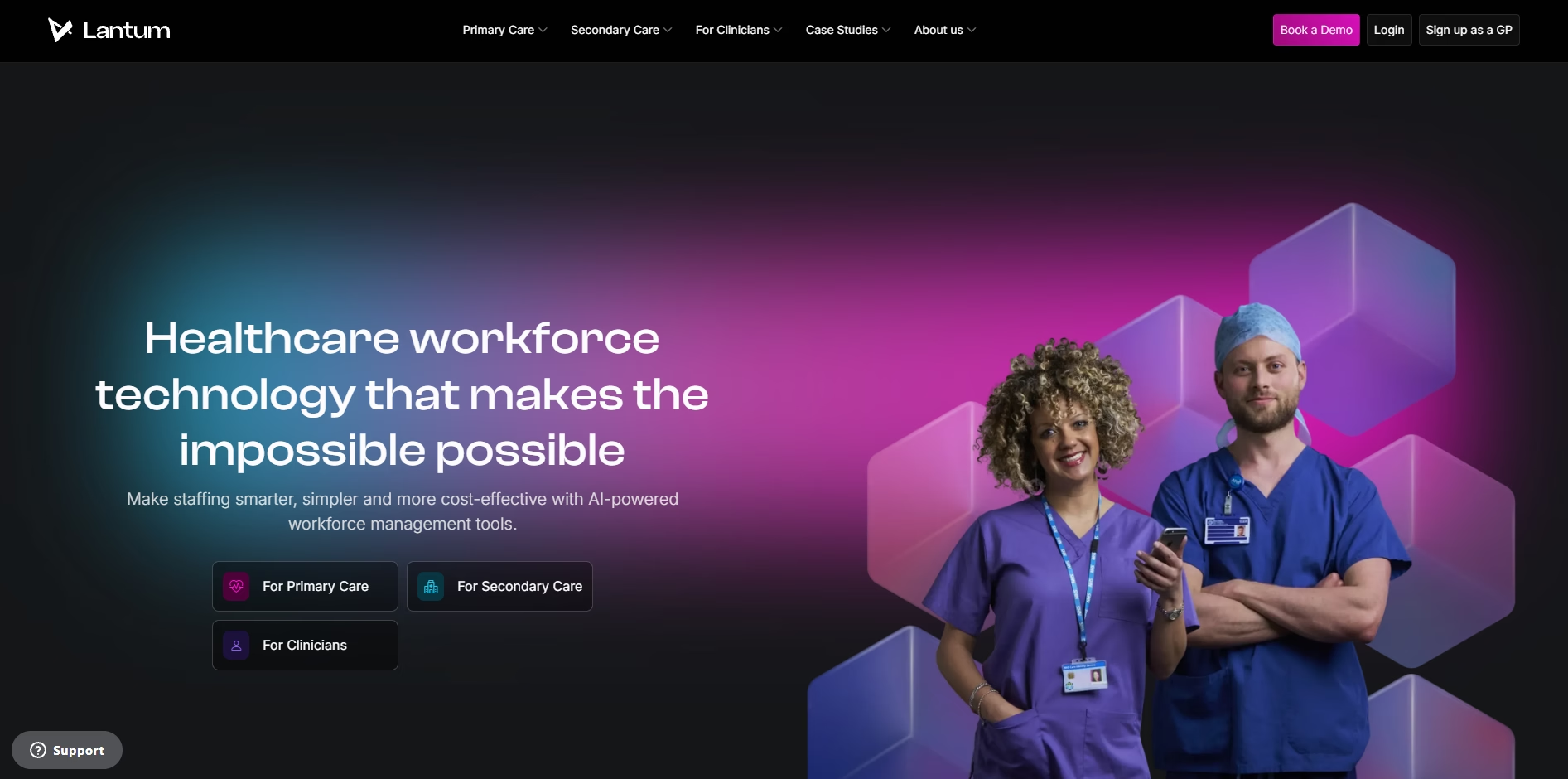
Lantum helps NHS organisations manage their workforce more efficiently, connecting GP practices and trusts with clinicians through a single scheduling and staff-bank platform. Used by a significant share of the UK's GP federations, Lantum is tackling one of the NHS's most persistent problems: getting the right staff, in the right place, without relying on expensive agency spend.
Why it's one to watch
- Solving NHS workforce and staffing inefficiencies at scale
- Reducing reliance on costly agency staffing
- Showing how B2B platforms can save the NHS money as well as time
Lantum is proof that some of the most valuable healthtech doesn't touch a patient directly – it's what keeps the system running behind the scenes.
5. Log my Care
Product: Care management software for care providers
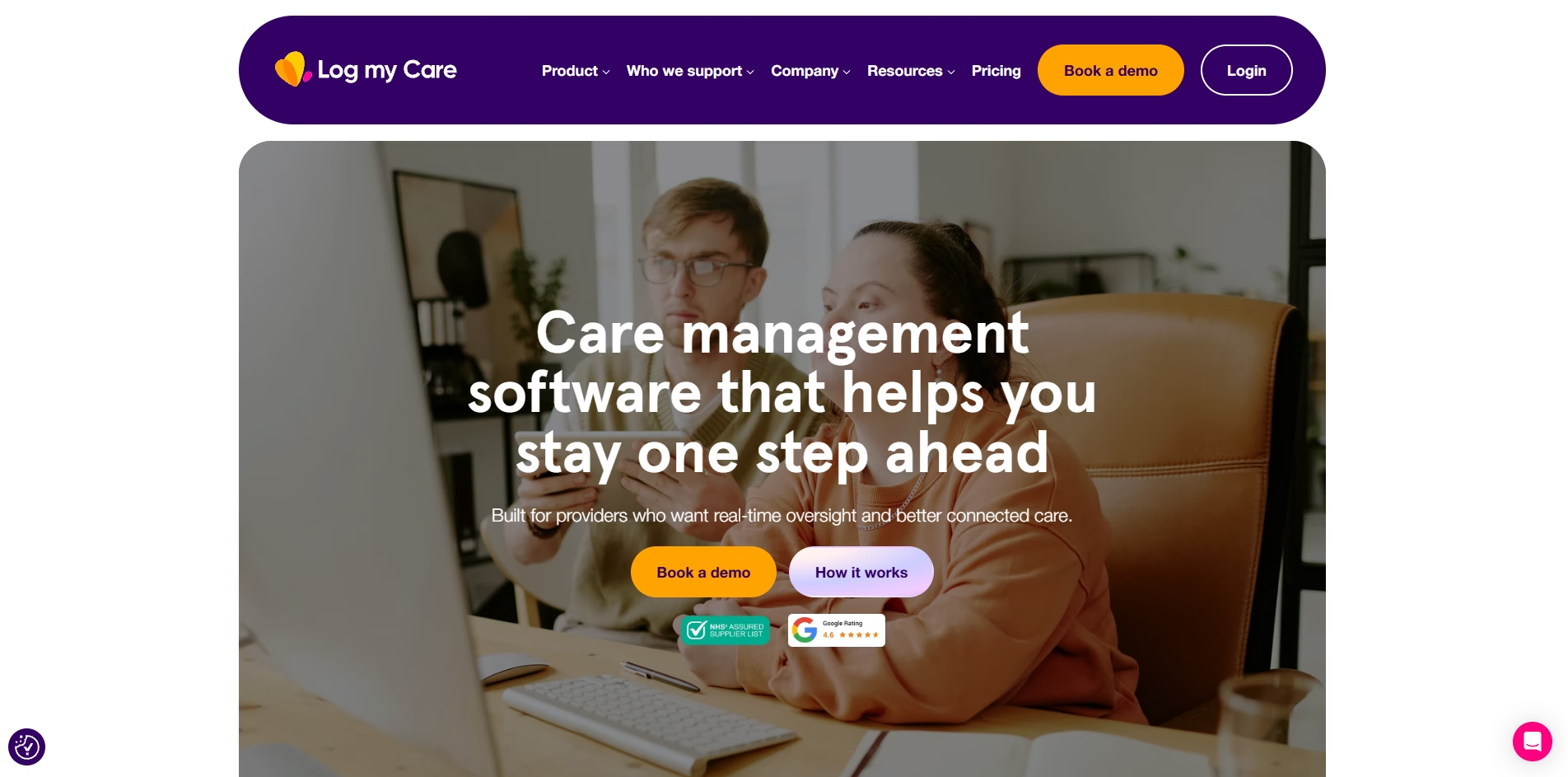
Log my Care gives domiciliary, residential and supported living providers a digital platform for care planning, incident management, risk assessments and daily logs. Since raising Series A funding, the company has grown quickly as an accessible, easy-to-adopt alternative for smaller and mid-sized care providers.
Why it's one to watch
- Making digital care records accessible to smaller providers
- Growing fast in a sector still transitioning away from paper
- Backing the shift toward the NHS's Digitising Social Care programme
Log my Care shows there's still room for new entrants in a market often assumed to be settled.
6. Aide | Words+Pixels PR partner
Product: Digital health for long-term conditions
Aide helps patients and clinicians manage long-term conditions through digital health tools and clinical support. Its approach reflects the growing focus on prevention and proactive care, particularly as healthcare systems look for ways to support patients outside traditional clinical settings.
Why it's one to watch
- Supporting long-term condition management
- Combining digital tools with clinical care
- Helping move care beyond the traditional consultation
Digital health could play a bigger role in helping people manage their health between appointments.
7. Locum's Nest
Product: NHS staffing and locum-booking marketplace
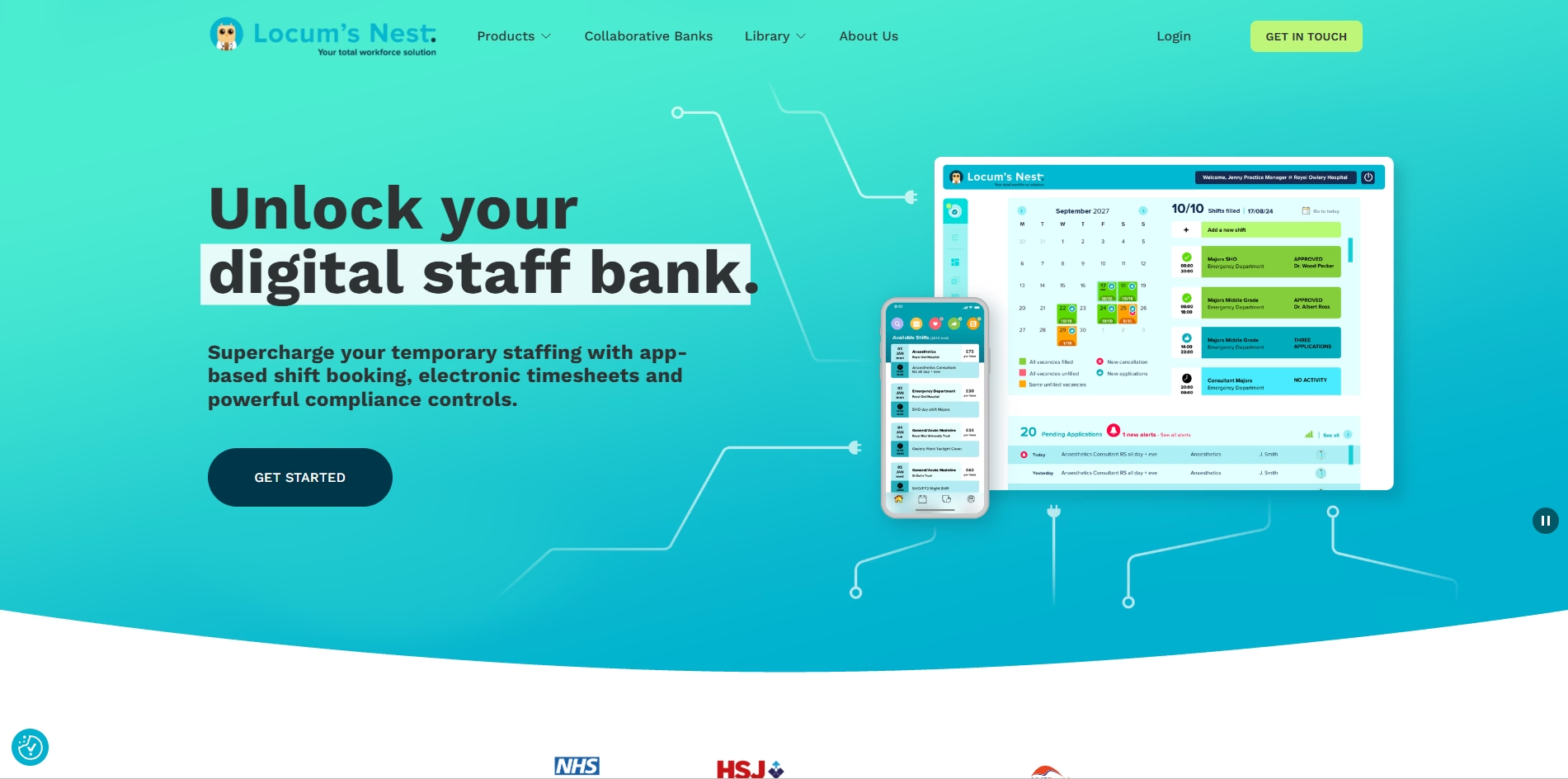
Locum's Nest connects NHS trusts and GP practices with clinicians looking for flexible shifts, helping fill rota gaps quickly and cutting agency costs. As workforce pressure remains one of the NHS's biggest challenges, platforms that make staffing faster and cheaper are becoming critical infrastructure.
Why it's one to watch
- Tackling NHS staffing shortages directly
- Giving clinicians more control over flexible working
- Reducing the system's reliance on expensive agency staff
Locum's Nest is part of a wider shift toward marketplace models solving NHS operational problems.
8. Cinapsis
Product: Clinical referral and advice platform
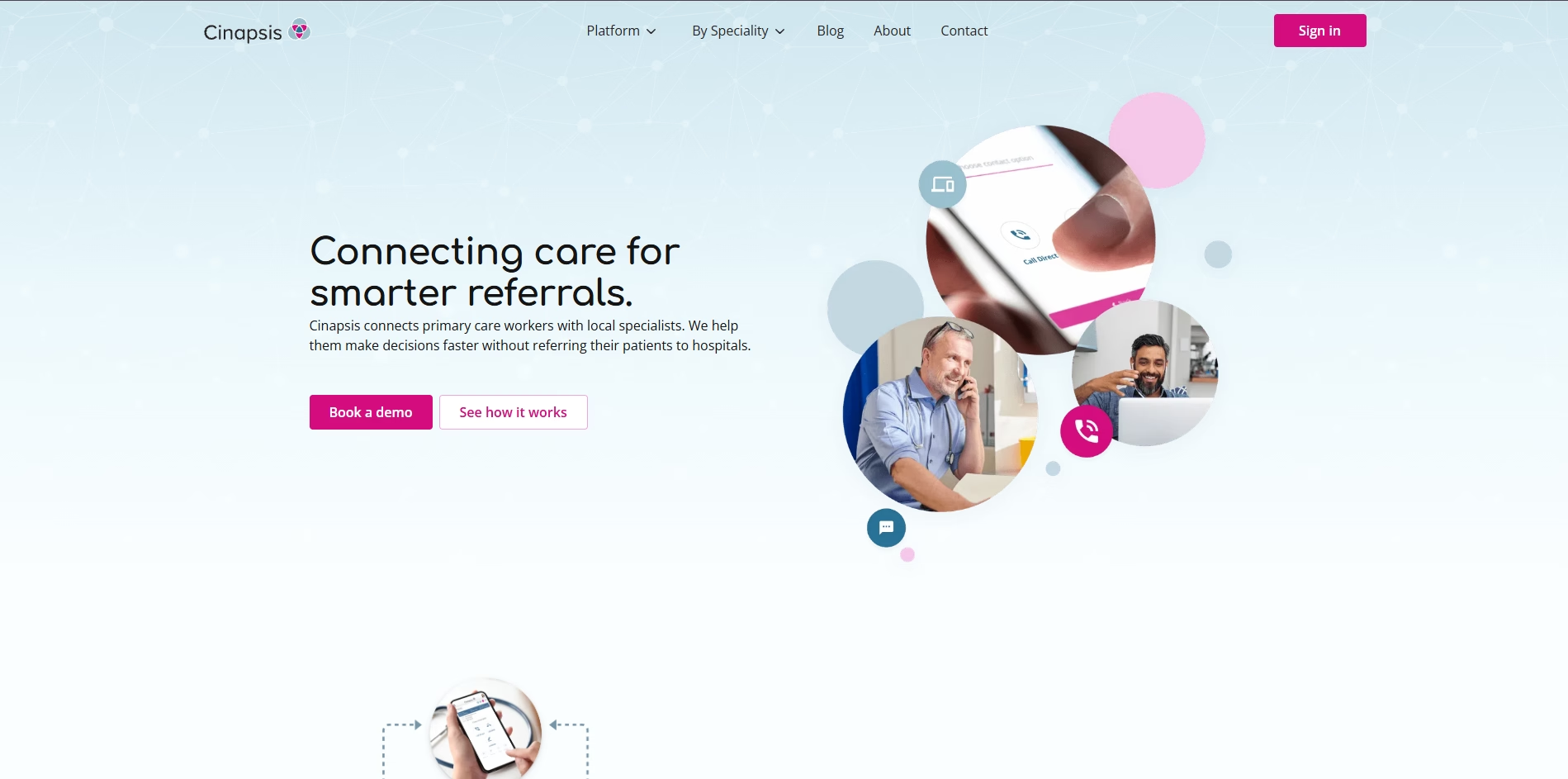
Cinapsis connects GPs and specialists, allowing clinicians to get rapid advice and guidance before making a referral – helping patients get the right care faster, without always needing a hospital appointment.
Integrated across NHS trusts, it's a good example of B2B healthtech designed to reduce pressure on secondary care.
Why it's one to watch
- Speeding up clinical decision-making between primary and secondary care
- Reducing unnecessary hospital referrals
- Supporting NHS efforts to manage demand more efficiently
Cinapsis shows how B2B tools can improve patient outcomes without patients ever using the platform themselves.
9. Social-Ability | Words+Pixels PR Partner
Product: Interactive light therapy and wellbeing technology
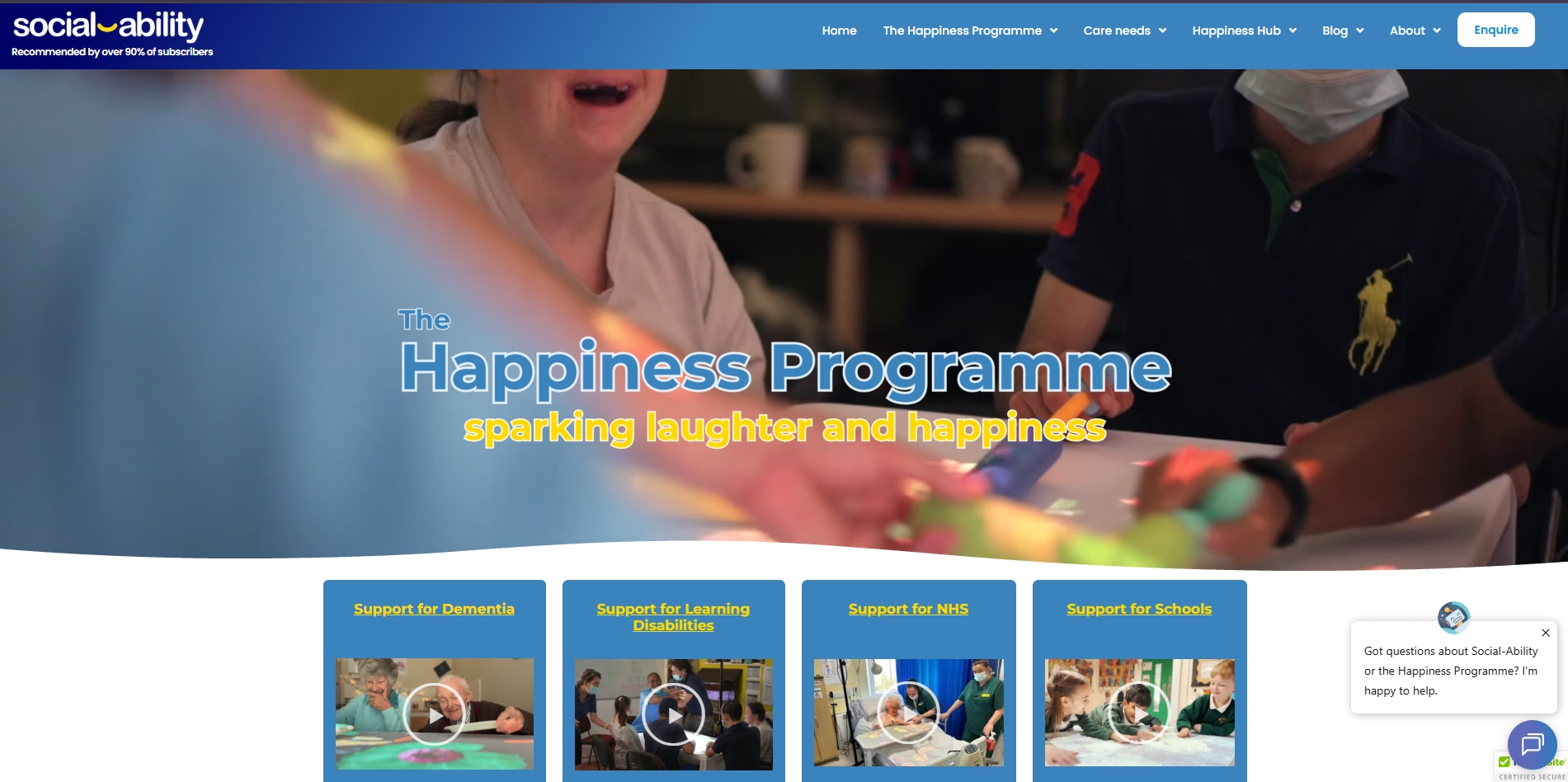
Social-Ability builds technology that projects games and light-based activities designed to improve cognitive, physical and social wellbeing in care settings – working with over 1,000 care homes, hospitals and local authorities.
As the sector pays more attention to wellbeing alongside clinical care, Social-Ability represents a different kind of healthtech: one focused on joy and engagement, not just efficiency.
Why it's one to watch
- Bringing a wellbeing-first approach to care technology
- Supporting staff as well as residents and patients
- Showing that healthtech innovation doesn't have to be purely clinical
Social-Ability is a reminder that the smallest brands on this list can still be doing some of the most human-centred work.
10. Phlo | Words+Pixels PR partner
Product: API-powered pharmacy infrastructure
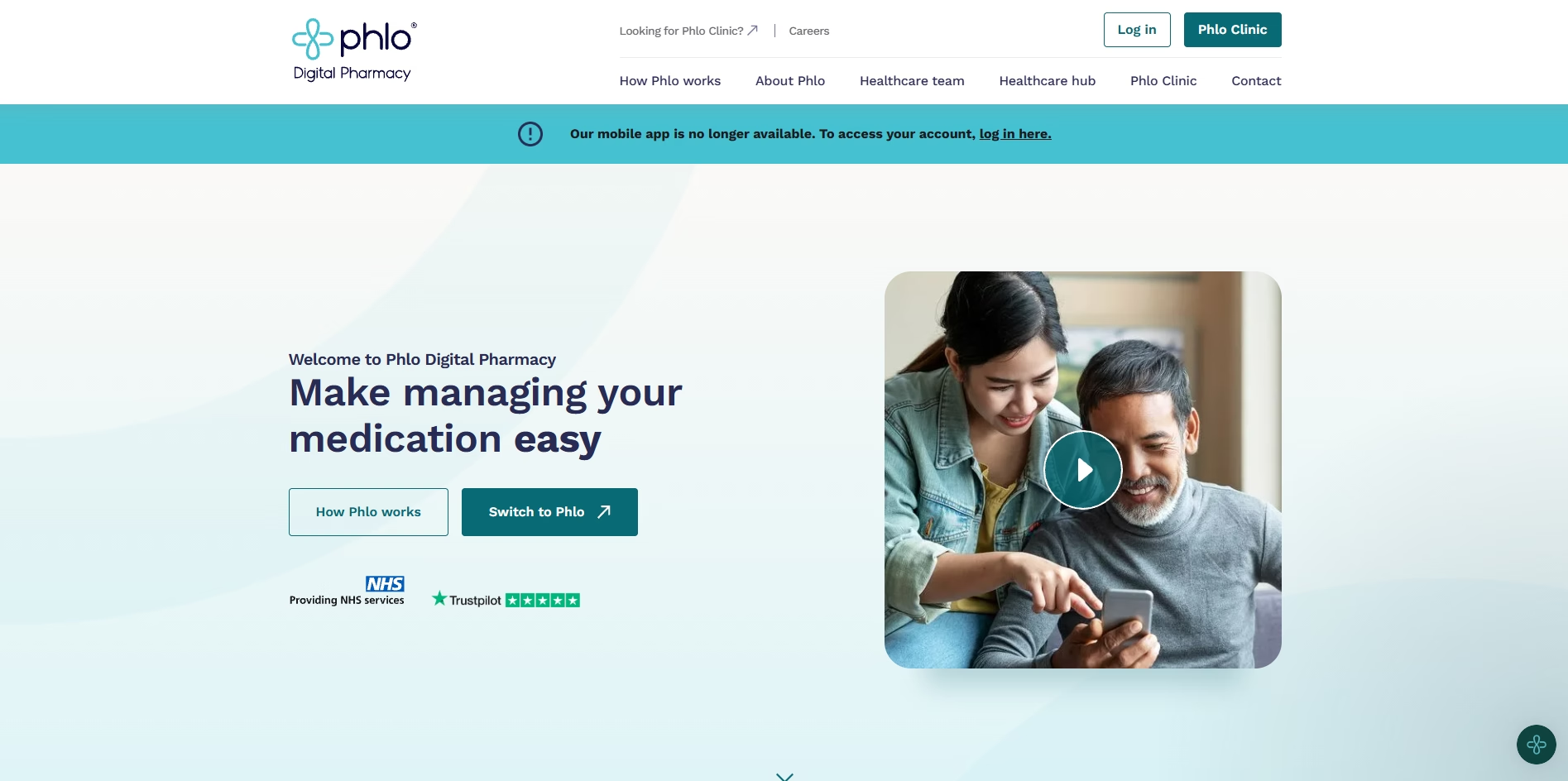
Most patients will never know Phlo exists - and that's the point. Its API, Phlo Connect, lets other healthcare businesses build prescribing, fulfilment and medication delivery straight into their own platforms, alongside Phlo's own digital pharmacy and clinic services.
As healthtech platforms race to offer medication as part of a bigger care journey, this kind of infrastructure is quietly becoming the layer everyone relies on and nobody talks about.
Why it's one to watch
- Turning pharmacy into infrastructure other healthtech platforms can plug straight into
- Handling prescribing, fulfilment and delivery through a single API
- Trusted by partners across both the NHS and private healthcare
Phlo proves the most valuable B2B healthtech doesn't need a slick patient-facing app - sometimes it's just the plumbing that makes everyone else's product work.
What are the 5 biggest B2B healthtech trends in 2026?
5 trends stand out:
1. AI is moving into everyday healthcare – not just diagnostics, but admin, scheduling and clinical documentation.
2. More care is moving into the home – shifting demand toward homecare and remote monitoring platforms.
3. B2B platforms are becoming essential NHS and care sector infrastructure – the invisible layer patients never see but rely on.
Workforce technology is tackling the NHS's staffing crisis – staff banks, scheduling and locum marketplaces are cutting agency spend.
The best healthtech solves a clear problem – vague "AI-powered" pitches are losing out to specific, evidenced outcomes.
Recognise your healthtech brand in this list?
We work with B2B Healthtech brands like Aide, Birdie, and Social-ability to do exactly that - helping them cut through the market noise, prove their clinical credibility, and get risk-averse buying committees to say "yes".
If you’re building a healthtech brand and are ready to turn your complex innovation into a trusted, unforgettable story that people actually care about, let’s talk.
FAQs: B2B healthtech PR
1. What is B2B healthcare PR?
B2B healthcare PR is the use of media relations, thought leadership and storytelling to build awareness, credibility and trust for companies selling technology or services to the NHS, clinicians and other healthcare organisations, rather than direct to consumers.
2. How is B2B healthtech PR different from consumer health PR?
Consumer health PR persuades patients. B2B healthtech PR persuades procurement teams, NHS decision-makers, clinicians and investors – audiences who want evidence, outcomes data and peer validation before they'll trust a new platform, not just a compelling headline.
3. Why is PR important for B2B healthtech companies?
Most B2B buyers research a company long before they ever speak to sales. PR builds the credibility and third-party validation – media coverage, case studies, awards, expert commentary – that shows up in that research and shortens the trust-building process.
4. Does NHS procurement affect a healthtech PR strategy?
Yes. Long NHS sales cycles mean PR needs to sustain visibility over months or years, not just around a single launch – think ongoing proof points like trust partnerships, outcomes data and framework approvals, not one big splash.
5. What types of healthtech companies does Words+Pixels work with?
We work across digital health, care technology, NHS workforce platforms and consumer health, including Aide, Birdie, and Social-ability
6. When should a B2B healthtech startup invest in PR?
Around a funding round, NHS framework approval, clinical milestone, major trust partnership or other credible, evidence-backed development. The key is having something worth saying, not just something to announce.
7. How do B2B healthtech companies get media coverage?
The strongest stories go beyond product launches and include outcomes data, NHS trust case studies, founder insight, funding news or commentary on wider healthcare and workforce trends.
8. Does B2B healthtech PR only target healthcare media?
No. Coverage can span healthcare, technology, business and trade press depending on the story – a funding round might land in business media, while an NHS outcomes story fits healthcare trade titles.
9. How is success measured in B2B healthtech PR?
Beyond coverage volume, look at share of voice against competitors, quality of publications, inbound interest from NHS buyers or investors, and whether coverage is actually being used in sales conversations.
10. How do you build trust in AI healthcare products?
By being transparent about evidence, safety, clinical oversight, data use and the role of healthcare professionals – vague claims about "AI-powered" everything don't cut it with NHS or clinical audiences.